
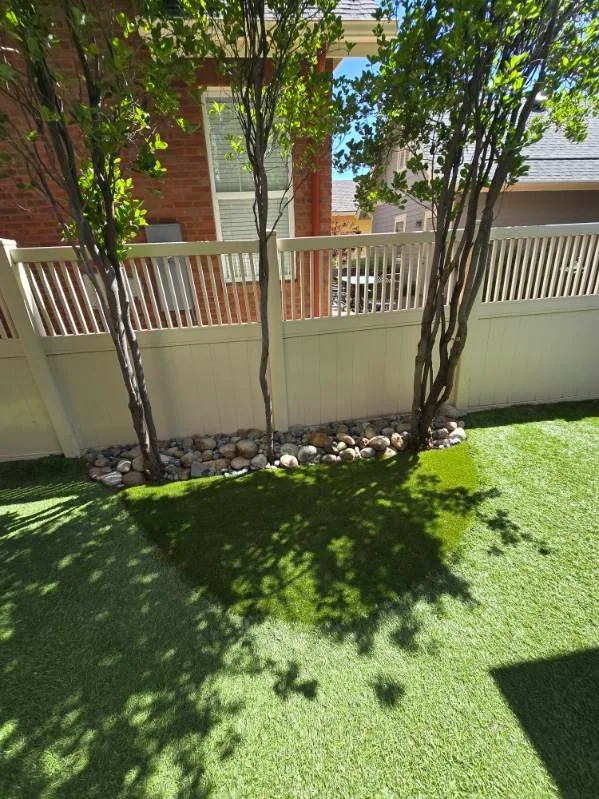
Keeping a lawn healthy along the Front Range is not easy. Clay-heavy soil, intense summer sun and swings between dry spells and hailstorms leave many yards with compacted dirt, bare patches and grass that browns out by midsummer. If your lawn is due for a fresh start, the two main options are artificial turf and natural sod. Both can work beautifully; they just solve different problems.
Artificial Turf
Artificial grass gives you a green lawn year-round with very little upkeep.
Why homeowners choose turf:
- Cuts watering, mowing and fertilizing to almost nothing
- Holds up to pets, kids and heavy foot traffic without bare spots
- Looks finished and consistent through every season
- A great fit for play areas, dog runs and spots where grass struggles to grow
Things to consider: Turf has a higher up-front cost than sod, and it does not offer the feel, smell or cooling of a living lawn. Like any lawn, it depends on a well-built, well-drained base.
Natural Sod
Sod is real grass, grown and delivered in rolls, so you get an established lawn without months of seeding and waiting.
Why homeowners choose sod:
- An instant, living lawn that looks finished the day it goes down
- The natural feel and look of real grass
- Usually a lower up-front cost than artificial turf
Things to consider: Sod needs watering, mowing and ongoing care, and new sod needs extra attention while it takes root. Choosing grass suited to our elevation, sun and temperature swings makes a big difference.
It Is Not Always One or the Other
Many yards benefit from a mix: artificial turf in a backyard play area or a shady corner where grass will not grow, and natural sod in the front yard. Pairing turf or sod with planting beds, river rock and other decorative rock, mulch and planting can also cut down on the total lawn area you need to maintain.
Base Preparation Matters for Both
Whichever you choose, a lawn is only as good as what is underneath it. Before any turf or sod goes down, the ground should be properly prepared:
- Old grass and debris removed
- Low spots and grading issues corrected so water does not pool
- A compacted, stable base so the lawn does not settle unevenly or shift through freeze-thaw cycles
Skipping this step is the most common reason a new lawn fails early. If water already pools in your yard, it is worth looking at drainage and grading as part of the project.
Questions to Help You Decide
- How much time do you want to spend on lawn care?
- How will the lawn be used? Kids, pets and heavy traffic favor turf.
- How much do you want to water?
- Does your HOA have guidelines? Many communities around Longmont, Erie and Firestone set standards for lawn appearance and edging.
Getting Started
Late fall and winter are good times to plan a spring lawn project. Learn more on our artificial turf and sod installation page, or request a free consultation and we will walk your yard and help you choose.